























Direkt zum Inhalt

Warenkorb

  • Laurence A. Rickels

    Ulrike Ottinger. Eine Autobiografie

  • N. John Habraken, Arnulf Lüchinger

    Die Träger und die Menschen. Das Ende des Massenwohnungsbau…

  • gerade nicht auf Lager
    Liz Kotz

    Words to Be Looked at. Language in 1960s Art

  • gerade nicht auf Lager
    Guy Debord

    Comments on the Society of the Spectacle

  • Michel de Certeau

    Kunst des Handelns

  • gerade nicht auf Lager
    Jacques Ranciere

    Ist Kunst widerständig?

  • Alain Badiou

    Wofür steht der Name Sarkozy?

  • gerade nicht auf Lager
    Donna Haraway

    Die Neuerfindung der Natur. Primaten, Cyborgs und Frauen.

  • gerade nicht auf Lager
    Stefanie Schulte Strathaus, Florian…

    Wer sagt denn, dass Beton nicht brennt, hast Du’s probiert?

  • gerade nicht auf Lager
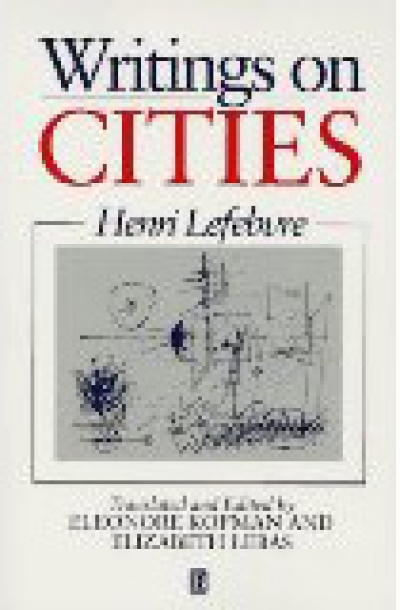
    Henri Lefebvre

    Writings on Cities

  • Loretta Napoleoni

    Rogue Economics. Capitalism's New Reality

  • AD

    AD 174. Vol. 75. Nr. 2. Samantha Hardingham. The 1970'…

  • An Architektur

    An Architektur 18: Camp for Oppositional Architecture:…

  • Johan Frederik Hartle

    Der geöffnete Raum. Zur Politik der ästhetischen Form

  • An Architektur

    An Architektur 16-17

  • Vera Beyer, Jutta Voorhoeve, Anselm…

    Das Bild ist der König. Repräsentation nach Louis Marin

  • An Architektur

    An Architektur 15 / FFM 11: Europäische…

  • An Architektur

    An Architektur 14: Camp for Oppositional Architecture

  • An Architektur

    An Architektur 11-13: Theorie und Praxis der Kartografie

  • An Architektur

    An Architektur 10: Gemeinschaftsräume

  • An Architektur

    An Architektur 04-09: Krieg und die Produktion von Raum

  • IDEA Magazine

    IDEA 296. Books <preposition> graphic design

  • IDEA Magazine

    IDEA 293. Stanley Donwood / Vacances. DD-DDD / Dimensions…

  • gerade nicht auf Lager
    An Architektur

    An Architektur 01-03

  • Pro qm

    Gutschein / Voucher

  • Siegfried Kracauer

    Das Ornament der Masse. Essays

The Witch Studies Reader

Stories about witches are by their nature stories about the most basic and profound of human experiences—healing, sex, violence, tragedies, aging, death, and encountering the mystery and magic of the unknown. It is no surprise, then, that witches loom large in our cultural imaginations. In academia, studies of witches rarely emerge from scholars who are themselves witches and/or embedded in communities of witchcraft practitioners. The Witch Studies Reader brings together a diverse group of scholars, practitioners, and scholar-practitioners who examine witchcraft from a critical decolonial feminist perspective that decenters Europe and departs from exoticizing and pathologizing writing on witchcraft in the global South. The authors show how witches are keepers of suppressed knowledges, builders of new futures, exemplars of praxis, and theorists in their own right. Throughout, they account for the vastly different national, political-economic, and cultural contexts in which “the witch” is currently being claimed and repudiated. Offering a pathbreaking transnational feminist examination of witches and witchcraft that upends white supremacist, colonial, patriarchal knowledge regimes, this volume brings into being the interdisciplinary field of feminist witch studies.


Soma Chaudhuri, Jane Ward (Hg)
The Witch Studies Reader
Duke University Press, 2025, 978-1-4780-3135-2
gerade nicht auf Lager