





Direkt zum Inhalt

Warenkorb

  • Laurence A. Rickels

    Ulrike Ottinger. Eine Autobiografie

  • N. John Habraken, Arnulf Lüchinger

    Die Träger und die Menschen. Das Ende des Massenwohnungsbau…

  • gerade nicht auf Lager
    Liz Kotz

    Words to Be Looked at. Language in 1960s Art

  • gerade nicht auf Lager
    Guy Debord

    Comments on the Society of the Spectacle

  • Michel de Certeau

    Kunst des Handelns

  • gerade nicht auf Lager
    Jacques Ranciere

    Ist Kunst widerständig?

  • Alain Badiou

    Wofür steht der Name Sarkozy?

  • gerade nicht auf Lager
    Donna Haraway

    Die Neuerfindung der Natur. Primaten, Cyborgs und Frauen.

  • gerade nicht auf Lager
    Stefanie Schulte Strathaus, Florian…

    Wer sagt denn, dass Beton nicht brennt, hast Du’s probiert?

  • gerade nicht auf Lager
    Henri Lefebvre

    Writings on Cities

  • Loretta Napoleoni

    Rogue Economics. Capitalism's New Reality

  • AD

    AD 174. Vol. 75. Nr. 2. Samantha Hardingham. The 1970'…

  • An Architektur

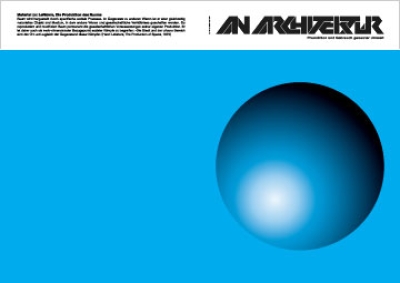
    An Architektur 18: Camp for Oppositional Architecture:…

  • Johan Frederik Hartle

    Der geöffnete Raum. Zur Politik der ästhetischen Form

  • An Architektur

    An Architektur 16-17

  • Vera Beyer, Jutta Voorhoeve, Anselm…

    Das Bild ist der König. Repräsentation nach Louis Marin

  • An Architektur

    An Architektur 15 / FFM 11: Europäische…

  • An Architektur

    An Architektur 14: Camp for Oppositional Architecture

  • An Architektur

    An Architektur 11-13: Theorie und Praxis der Kartografie

  • An Architektur

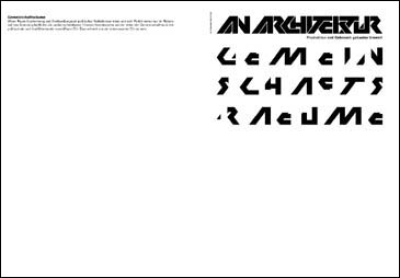
    An Architektur 10: Gemeinschaftsräume

  • An Architektur

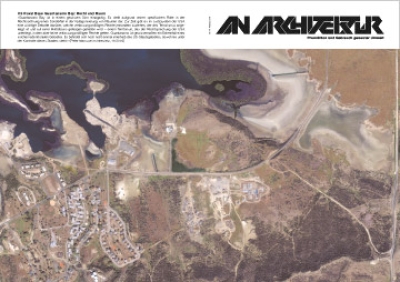
    An Architektur 04-09: Krieg und die Produktion von Raum

  • IDEA Magazine

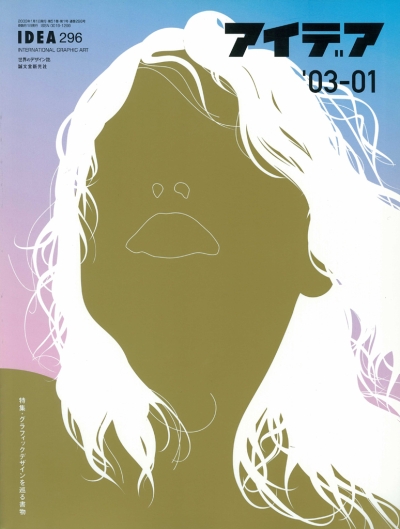
    IDEA 296. Books <preposition> graphic design

  • IDEA Magazine

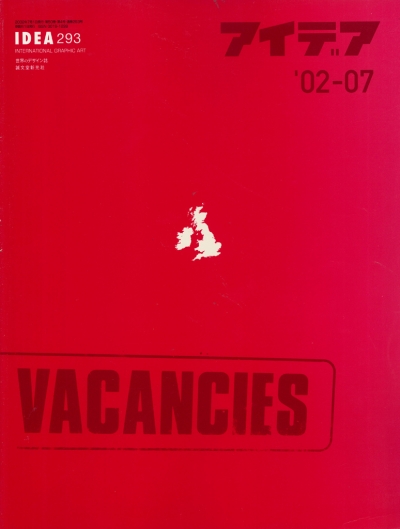
    IDEA 293. Stanley Donwood / Vacances. DD-DDD / Dimensions…

  • gerade nicht auf Lager
    An Architektur

    An Architektur 01-03

  • Pro qm

    Gutschein / Voucher

  • Siegfried Kracauer

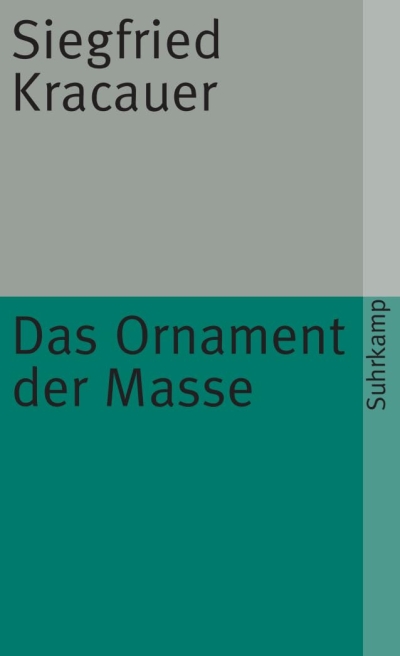
    Das Ornament der Masse. Essays

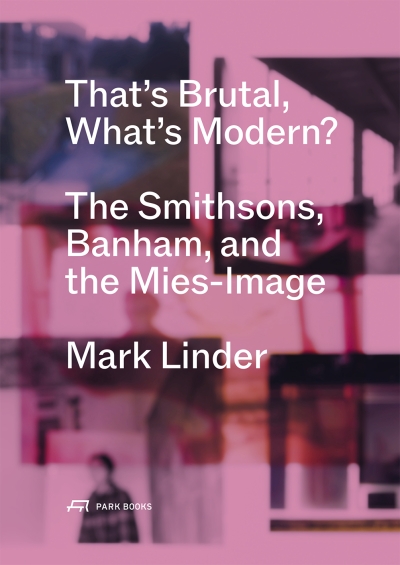
Cover That's Brutal, What's Modern? The Smithsons, Banham, and the Mies-Image

That's Brutal, What's Modern? The Smithsons, Banham, and the Mies-Image

In That's Brutal, What's Modern?: The Smithsons, Banham, and the Mies-Image, Mark Linder offers an original understanding of New Brutalism as a consequential and generative episode in the history of post-photographic imaging practices. This episode exemplifies and anticipates the kinds of congnition and intelligence that dominate architectural imagination today. Linder aims to recover a specific and integral, yet overlooked, aspect of the peculiar novelty of New Brutalism by recconsiderung the entirety of Alison and Peter Smithson’s work as a fitful and evolving fifty-year fascination with the imaging potential they found in the architecture of Mies van der Rohe.

In six chapters and some forty arrays of images, the book progresses from historical research to theoretical speculations on the historical legacy and contemporary potential of the Smithsons’ pursuit of the “Mies-Image.” The chapters situate New Brutalism in the context of emerging theories, practices, and cultures of imaging in postwar Britain, trace the Smithsons’ imaging practices and the appearances of the Mies-Image as it evolves in their projects and publications over five decades, reconsider Reyner Banham's evaluations of Mies and his role in New Brutalism, and explore imaging theory and its potential to re-evaluate the significance of New Brutalism.

This book will appeal to a broad audience among architects, students of architecture, and those with a serious interest in modernist and contemporary architecture, but also among scholars in multiple academic fields including architectural and art history, visual studies, media studies, and photography.


Mark D. Linder
That's Brutal, What's Modern? The Smithsons, Banham, and the Mies-Image
Park Books, 2025, 978-3-03860-401-3
38,00 €