




Direkt zum Inhalt

Warenkorb

  • Laurence A. Rickels

    Ulrike Ottinger. Eine Autobiografie

  • N. John Habraken, Arnulf Lüchinger

    Die Träger und die Menschen. Das Ende des Massenwohnungsbau…

  • gerade nicht auf Lager
    Liz Kotz

    Words to Be Looked at. Language in 1960s Art

  • gerade nicht auf Lager
    Guy Debord

    Comments on the Society of the Spectacle

  • Michel de Certeau

    Kunst des Handelns

  • gerade nicht auf Lager
    Jacques Ranciere

    Ist Kunst widerständig?

  • Alain Badiou

    Wofür steht der Name Sarkozy?

  • gerade nicht auf Lager
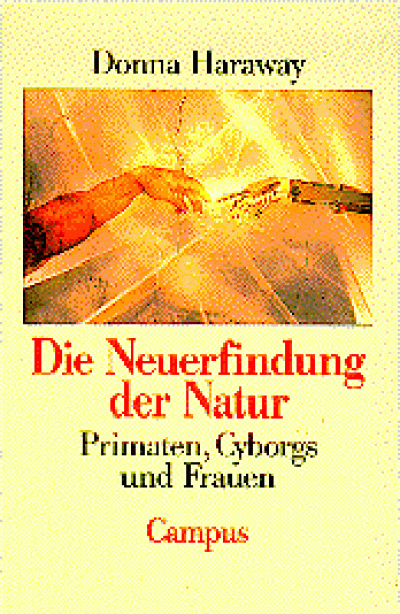
    Donna Haraway

    Die Neuerfindung der Natur. Primaten, Cyborgs und Frauen.

  • gerade nicht auf Lager
    Stefanie Schulte Strathaus, Florian…

    Wer sagt denn, dass Beton nicht brennt, hast Du’s probiert?

  • gerade nicht auf Lager
    Henri Lefebvre

    Writings on Cities

  • Loretta Napoleoni

    Rogue Economics. Capitalism's New Reality

  • AD

    AD 174. Vol. 75. Nr. 2. Samantha Hardingham. The 1970'…

  • An Architektur

    An Architektur 18: Camp for Oppositional Architecture:…

  • Johan Frederik Hartle

    Der geöffnete Raum. Zur Politik der ästhetischen Form

  • An Architektur

    An Architektur 16-17

  • Vera Beyer, Jutta Voorhoeve, Anselm…

    Das Bild ist der König. Repräsentation nach Louis Marin

  • An Architektur

    An Architektur 15 / FFM 11: Europäische…

  • An Architektur

    An Architektur 14: Camp for Oppositional Architecture

  • An Architektur

    An Architektur 11-13: Theorie und Praxis der Kartografie

  • An Architektur

    An Architektur 10: Gemeinschaftsräume

  • An Architektur

    An Architektur 04-09: Krieg und die Produktion von Raum

  • IDEA Magazine

    IDEA 296. Books <preposition> graphic design

  • IDEA Magazine

    IDEA 293. Stanley Donwood / Vacances. DD-DDD / Dimensions…

  • gerade nicht auf Lager
    An Architektur

    An Architektur 01-03

  • Pro qm

    Gutschein / Voucher

  • Siegfried Kracauer

    Das Ornament der Masse. Essays

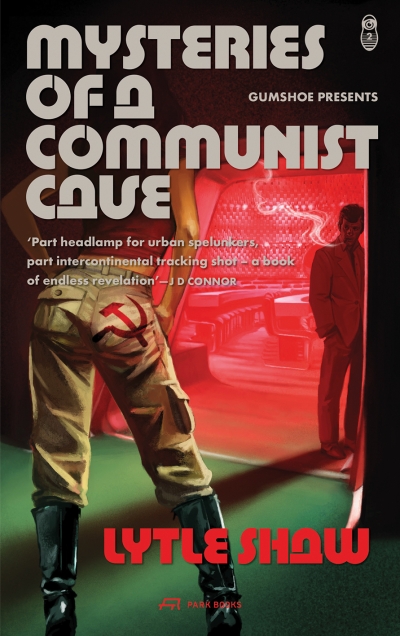
Mysteries of a Communist Cave

Mysteries of a Communist Cave

(The Gumshoe Series of Architectural Mysteries Vol 2/ Gumshoe 2)

Second book in the Gumshoe series of “architectural crime stories,” following the acclaimed initial volume The House of Doctor Koolhaas.
 

Gumshoe is a new series of architectural books that introduces an original approach to the writing of architectural history. Emulating the detective novel, the focus is on actual buildings rather than on speculative designs and theories. The style and form is fresh and scholarly but also easy and enjoyable to read. In Mysteries of a Communist Cave, the second book in the Gumshoe series, Lytle Shaw conducts an investigation of Oscar Niemeyer’s building for the French Communist Party’s (PCF) central committee in Paris.

Designed in 1965, just as party theorists began to rethink many bedrock assumptions about representation, Oscar Niemeyer’s PCF building is a microcosm of the shifting political and architectural landscape of the 1960s. It is also a literal Marxist structure that can thus help us concretely picture just exactly what Structuralist Marxism might have been. Shaw draws out the PCF’s language and context one element at a time and puts the elegant curtain-wall building with its cave-like assembly hall into revelatory dialogue with interlocutors in film, philosophy, anthropology, and politics.

Perhaps the ultimate mystery of the communist cave is that its owners have not more often and more powerfully presented their landmark building as the vivid source of imagery it could be for the kind of world the PCF might like to construct.


Lytle Shaw (Eds. Thomas Weaver, Françoise Fromonot)
Mysteries of a Communist Cave

(The Gumshoe Series of Architectural Mysteries Vol 2/ Gumshoe 2)

Park Books, 2026, 978-3-03860-447-1
19,00 €